.avif)


What to Do If You Get in a Car Accident in Idaho
If you are trying to figure out what steps to take after a car accident in Idaho, make sure to protect your safety, get medical attention if needed, and create a clear record of what happened. The next priority is to avoid early mistakes that can damage an insurance claim or later legal action after a car accident.
Idaho law also sets reporting rules, insurance requirements, and deadlines that can affect what happens after the crash, which is one reason many people speak with a Boise car accident attorney once the immediate emergency has passed.
Crash data show why this topic matters. According to the 2024 Idaho Traffic Crashes report, Idaho recorded 28,158 motor vehicle crashes in 2024, with 238 fatalities and 11,897 people injured. A traffic crash occurred every 19 minutes that year.
Unfortunately, car accident victims in Boise and across Idaho often have to deal with medical bills, lost wages, insurance claims, and legal questions long before the full effect of the crash is clear.
Immediate Steps to Take After a Car Accident
The first steps after a car crash shape both safety and proof. A calm, methodical response can help protect you from further harm and make the legal process easier later. Start with the steps below and keep your focus on safety, documentation, and prompt reporting.
Step 1: Move to a Safe Location and Use Hazard Lights
Move the vehicles involved out of travel lanes if you can do it safely, and use hazard lights so other drivers can see the scene. Idaho’s insurance checklist also tells drivers to assess the scene and not get out of the car if it is not safe to do so. A safe location reduces the chance of a second accident and helps emergency responders reach you more easily.
Step 2: Check for Injuries and Call 911
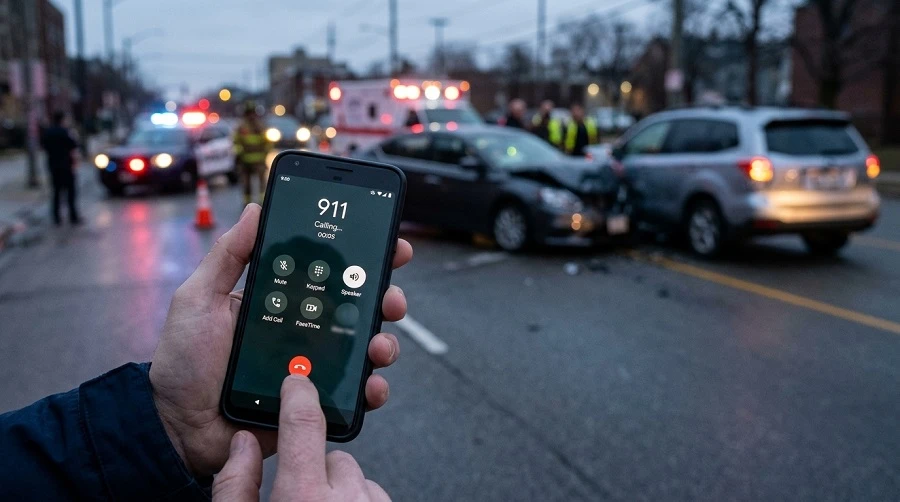
Check yourself, passengers, and anyone in the other vehicle for injuries, then call 911 if there is any sign of injury, danger, or blocked traffic. Even if you feel fine, some injuries and internal trauma are not immediately apparent, especially after adrenaline spikes. Call the police, report injuries, and explain where the crash happened.
Step 3: Exchange Information and Gather Evidence
Exchange information with the other driver, including name, contact information, insurance details, policy number, vehicle description, and license plate number. Take photographs of the accident scene, the vehicles involved, road conditions, traffic signs, skid marks, debris, and visible injuries, and get witness names if anyone saw the crash.
Step 4: Seek Medical Attention and Start a Record of Treatment
Seek medical attention as soon as possible. A medical evaluation can uncover internal injuries, soft-tissue damage, concussion symptoms, or other problems that are not obvious at the accident scene, and it also creates medical records that matter in an injury claim.
Medical treatment, follow-up care, and a clear record of symptoms can become central if the insurance company later argues that the crash caused little or no harm.
Step 5: Notify Your Insurance Company Carefully
Notify your insurance company promptly, but keep your report factual and direct. Try not to guess about injuries, speed, or fault. If the other side’s insurance adjusters ask for a recorded statement early, speaking with our Boise car accident lawyer first can preserve your claim.
When Idaho Law Requires You to Report a Car Accident
Under Idaho Code section 49-1305, a driver must immediately report an accident if it involves injury, death, or property damage to any one person exceeding $1,500. The report goes to the local police department if the accident happens within a city, otherwise to the county sheriff or the nearest office of the Idaho State Police.
The 2024 Idaho Traffic Crashes report also notes that the statewide crash database includes crashes investigated by law enforcement and that, after 2005, property-damage-only crashes over $1,500 fall within the reporting system.
That means significant property damage is not just an insurance issue. It can also be the reason the crash becomes part of the official record used by law enforcement and the Idaho Transportation Department.
What Information Should You Collect After an Accident?
The information gathered at the accident scene can shape both insurance claims and any later legal action. A clear record from the start can also help if the other driver changes the story later.
You should collect:
- The other driver’s basic information: Name, address, phone number, and vehicle information.
- Insurance details: Insurance provider name, policy number, and any other available coverage information.
- Scene details: The location, time, weather, roadway conditions, and anything else that helps describe how the crash happened.
- Witness and officer information: Names and contact details for witnesses and the names of responding law enforcement officers.
- Photos and video: Images of the vehicles involved, property damage, road layout, traffic signs, and visible injuries.
- Police report information: The report number and instructions on how to request a copy if officers respond.
Photos, witness contacts, and insurance details can matter just as much as later medical records. Those early notes often become some of the strongest support for your legal rights after an Idaho accident.
What Not to Do After a Car Accident in Idaho
The first mistakes after a car accident can make an insurance claim or injury case harder than it needs to be. Even when the other driver caused the crash, the wrong statement or a rushed decision can create problems later.
Do Not Admit Fault at the Scene
Do not admit fault at the accident scene, even if you are shaken up and trying to be polite. A statement made too early can later be used by an insurance company, a defense lawyer, or the other driver to shift blame.
Do Not Ignore Medical Care Because You Feel Fine

Do not skip medical care just because symptoms do not seem serious. Some injuries take time to appear, and delays in treatment can make both recovery and the claim more difficult.
Do Not Accept a Fast Settlement Offer
Do not accept a quick settlement offer before the medical picture is clear. Early offers often come before the full extent of injuries, lost wages, and future medical expenses can be measured.
Do Not Give a Recorded Statement Too Soon
Do not give a recorded statement to the other side’s insurance adjusters without thinking through the consequences. Car accident claims are often weakened by early mistakes, not just by bad facts.
Avoiding these mistakes can protect both your health and your legal position. A more careful response after the crash often leads to a stronger record, a clearer claim, and fewer problems with the insurance company later.
How Idaho Car Accident Laws Affect Your Claim
Idaho law affects who pays after a crash, how fault is measured, what insurance may apply, and how long you have to act. Those rules can shape both insurance claims and any later personal injury lawsuit.
Key Idaho rules include:
- Fault-based liability: Idaho is a fault-based state, so the driver who caused the crash is generally financially responsible for the damage that followed.
- Modified comparative negligence: Under Idaho Code section 6-801, you may still recover damages if your share of fault is less than the other side’s, but any recovery is reduced by that percentage.
- Minimum insurance requirements: The Idaho Department of Insurance required auto coverage page states that Idaho requires at least $25,000 per person, $50,000 per accident in bodily injury coverage, and $15,000 in property damage liability coverage.
- UM/UIM coverage rules: The same Idaho Department of Insurance page and Idaho Code section 41-2502 provide that insurers must offer uninsured and underinsured motorist bodily injury coverage unless it is rejected in writing.
- Time limits on personal injury claims: Idaho Code section 5-219 generally gives two years to file a personal injury claim after a car accident.
These rules can affect fault disputes, available insurance coverage, and the value of the claim. They are often part of the first serious review when injuries, lost wages, or legal action follow a car accident in Idaho.
What Damages May Be Available After a Car Accident?

A personal injury claim after a car accident in Idaho may involve far more than repair costs. The value of the claim often depends on the injuries, the medical treatment involved, and the effect of the crash on work and daily life.
Recoverable damages may include:
- Medical bills and treatment costs: Emergency care, hospital bills, follow-up treatment, rehabilitation, and future medical expenses.
- Lost income: Lost wages and reduced earning capacity if the injuries affect your ability to work.
- Property damage and other economic losses: Vehicle repairs, replacement costs, and other financial losses tied to the crash.
- Non-economic damages: Pain, emotional distress, and the effect of the injuries on daily life.
This is one reason many car accident victims speak with a personal injury lawyer or personal injury attorney before settlement talks move too far. A full review of medical records, medical expenses, and insurance policies often gives a clearer picture of possible compensation.
When Legal Action Makes Sense After an Idaho Car Crash
Not every Idaho accident turns into a lawsuit, but some clearly call for legal review. In those cases, early legal action can help protect the claim, clarify liability, and address problems the insurance company may already be creating.
Legal review often makes sense when:
- The crash caused serious injuries: High medical bills, ongoing treatment, or lasting physical limits may raise the value and complexity of the claim.
- Fault is disputed: The other driver denies responsibility, the crash report is incomplete, or the insurance company tries to shift blame.
- The insurance company is minimizing the claim: Insurance adjusters may treat a clear injury claim as minor or make an offer that does not reflect the actual losses.
- The financial impact keeps growing: Lost wages, future medical expenses, and other damages may make legal action worth serious review.
Many car accident claims are handled on a contingency fee basis, so injured people can assess their legal options without paying attorney fees up front. That does not mean every crash leads to a lawsuit, but it does make legal action after a car accident more realistic when the stakes are higher.
How to Get a Police Report or Accident Report in Idaho

The Idaho Transportation Department's crash report request page says crash reports are available to the general public and currently cost a few dollars plus transaction fees. Collision records are considered public information, which makes the police report or accident report one of the easiest official documents to obtain early in the legal process.
A crash report is not the final word on liability, but it often helps identify the parties, vehicles involved, reporting officer, location, and basic narrative of the event. It can also help confirm where to start when an insurance company, a medical provider, or a personal injury attorney begins piecing the file together.
What Matters Most After an Auto Crash
The clearest answer to what to do if you get in a car accident in Idaho is this: get to a safe location if possible, call for help when needed, seek medical attention, gather evidence, report the crash when Idaho law requires it, and be careful with early statements to any insurance company.
Those steps protect both health and proof, and they often shape what happens with insurance claims, medical expenses, and any later dispute over legal action after a car accident.
At the Law Offices of Matthew G. Gunn, we help people deal with the legal and financial consequences of car accidents in Idaho. Our office can review crashes involving injuries, disputed fault, insurance problems, and questions about what Idaho law requires after a collision.
If a car accident in Idaho left you with medical bills, lost wages, or questions about your legal options, contact us for a free consultation.


.avif)
Recent Posts
