.avif)




Boise Anesthesia Errors Lawyer
Anesthesia errors demand expert litigation.


Proven Results in Complex Litigation
Legal Help for Anesthesia Error Victims in Boise, ID
At the Law Offices of Matthew G. Gunn, anesthesia error cases receive a close review of the medical facts and direct attention from our Boise medical malpractice attorney.
Anesthesia providers have no room for error during surgery. Administering the wrong drug, giving the wrong dosage, failing to monitor patients carefully, or missing a sign of respiratory distress can lead to tragedy. What should have been a routine procedure can instead cause brain damage, stroke, cardiac injury, organ damage, or death.
Research cited by the Agency for Healthcare Research and Quality identifies medication errors as a major source of harm; about 15.75 million medication errors occur each year in U.S. operating rooms, with nearly half of them harming patients.
When this happens, Boise anesthesia errors lawyers look deeper to find out whether there was a preventable failure in medical care. They follow Idaho law to determine whether the provider met the required standard of care.
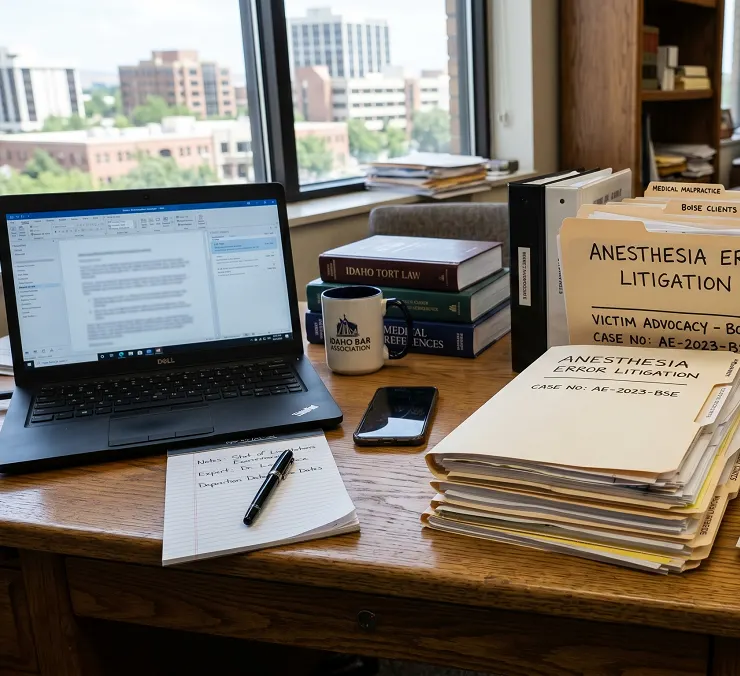
Types of Idaho Anesthesia Errors We Handle at the Law Offices of Matthew G. Gunn
Anesthesia errors can happen at different stages of care, from medication orders to airway control. Our anesthesia errors attorney in Boise, ID, can review the timeline to determine where the failure occurred.
Wrong Drug or Wrong Dosage
A patient may receive the wrong medication or an incorrect dosage based on their age, weight, allergies, or medical history. When this happens, the patient could regain consciousness during surgery or experience respiratory depression, cardiac instability, seizures, or toxic drug reactions.
Failure to Monitor Oxygen, Airway, or Vital Signs
Patients under anesthesia must be watched for oxygen loss, changes in blood pressure, irregular heart rhythms, and airway obstructions. When those warning signs are missed, the result may be brain injury, stroke, cardiac arrest, or permanent disability.
Intubation and Airway Management Errors
Some injuries happen because a patient is not intubated correctly or cannot be ventilated properly. These airway failures can cause rapid oxygen loss and, in severe cases, death.
Inadequate Preoperative Review
Before a planned surgery, patients should be screened for allergies, previous drug reactions, sleep apnea, medication interactions, and other known risks. A rushed or incomplete screening can turn a preventable issue into a serious complication.
Delayed Response to Anesthesia Complications
During surgery, a patient may show signs of oversedation, allergic reaction, or dropping oxygen levels. If the team does not act quickly, that delay can become evidence in a medical malpractice claim.
Often, an anesthesia injury starts with one mistake and worsens when providers fail to respond in time.
The Medical Consequences of Anesthesia Errors Patients May Face

Anesthesia errors can result in serious, long-term harm, including:
- Brain injuries and cognitive impairment: Oxygen deprivation may lead to memory loss, speech problems, seizures, and difficulty thinking.
- Organ and cardiac complications: Anesthesia-related failures can cause kidney damage, heart complications, and other internal injuries.
- Nerve damage and physical limitations: Patients may suffer nerve injuries, chronic pain, loss of mobility, or reduced independence in daily life.
- Emotional and psychological trauma: A patient who wakes up during surgery or suffers severe complications can develop anxiety, depression, or PTSD.
- Permanent disability: Some patients are left with lasting impairments that require ongoing care and financial support.
- Wrongful death and family impact: In the most severe medical malpractice cases, the patient does not recover, and their families are left to grieve.
When the medical consequences are severe, anesthesia errors attorneys in Boise can help their clients decide whether to take legal action.
What Compensation Can We Pursue in Your Anesthesia Error Case in Idaho?
An anesthesia error can leave a patient and their family with major financial and personal losses. Through a medical malpractice claim, the victims can seek:
- Medical expenses: Hospital bills, surgery, medication, rehabilitation, and doctors’ fees.
- Future medical care: Ongoing treatment, therapy, and long-term care.
- Lost wages and reduced earning ability: Income lost immediately after the injury or beyond.
- Pain and suffering: Physical pain and the overall impact of the injury on the patient’s life.
- Wrongful death damages: In fatal cases, funeral expenses, lost financial support, and loss of companionship.
The compensation pursued in these cases depends on the facts, the seriousness of the harm, and the available evidence.
What to Do If You’ve Been a Victim of an Anesthesia Error in Boise, ID
The steps you take after an anesthesia mistake can affect both your health and the strength of any future legal claim.
Seek Immediate Medical Evaluation
Start by obtaining prompt follow-up medical care. Tell the provider exactly what happened before, during, and after the procedure so that any complications are properly documented and treated.
Request and Preserve Medical Records
Ask for complete copies of your medical records, including anesthesia records, discharge instructions, imaging, prescriptions, and billing statements. These documents help establish what led to the error and what effects it had on you.
Be Cautious with Insurance Communications
Avoid giving a detailed statement to an insurance representative before you fully understand the medical facts. If you speculate about what might have happened, your words could conflict with what the records later reveal and affect your claim.
Speak with an Anesthesia Errors Lawyer in Boise, ID
An anesthesia errors lawyer in Boise can review the evidence and determine whether you have grounds for a medical malpractice lawsuit under Idaho law.
How the Law Offices of Matthew G. Gunn Can Prove an Anesthesia Error
Anesthesia negligence cases require detailed evidence, not assumptions based on a poor outcome alone. The claim must be supported by a qualified expert willing to testify that the provider failed to meet the applicable standard of care and that the failure caused the patient’s injury.
To build these cases, we focus on the following:
- Reviewing medical and hospital records: Including hospital records, medication logs, monitor strips, staff notes, informed consent forms, and post-operative records.
- Reconstructing the timeline of care: Showing what happened before, during, and after the procedure, including when symptoms appeared and how the medical team responded.
- Identifying departures from the standard of care: Proving that the injury wasn’t just an unfortunate outcome but was the result of substandard medical practices.
- Working with qualified medical experts: Drawing on witnesses to explain how the anesthesia team or other healthcare providers made avoidable mistakes.
- Linking the error to the patient’s harm: Showing that the anesthesia error was the direct cause of serious injury, severe complications, or death.
A strong claim depends on proving both what went wrong and why that failure matters. The early stages of the case are important because medical records, witness accounts, and expert review are central to proving negligence.
Parties That May Be Liable for an Anesthesia Error

Liability in an anesthesia error case may involve more than one provider or organization, depending on how the injury occurred. Responsible parties may include:
- Anesthesiologists: These medical doctors select drugs, calculate dosages, administer anesthesia, and monitor the patient during the procedure.
- Certified registered nurse anesthetists (CRNAs): CRNAs are advanced providers who may independently administer anesthesia and monitor patient stability.
- Surgeons: Surgeons may share responsibility if they ignored warning signs, rushed the procedure, or failed to coordinate with the anesthesia team.
- Nurses and operating room staff: These healthcare providers monitor vital signs, document care, and communicate changes in the patient’s condition.
- Hospitals and surgical centers: Facilities can be held liable for failures in hiring practices, staffing decisions, training, or policies.
- Pharmacists or pharmacy staff: These providers might make medical errors involving the preparation, labeling, or dispensing of anesthesia drugs.
- Medical device manufacturers: When faulty monitoring equipment or anesthesia machines contribute to the injury, the manufacturer may be liable.
In some cases, multiple parties play a role in the harm caused. Identifying all of these parties is critical; they may carry separate insurance coverage, which can affect how much financial compensation is available.
Idaho Deadlines and Rules That Can Affect Your Anesthesia Error Claim
Idaho generally gives injured patients two years to file medical malpractice claims, although the state extends this deadline if the anesthesia provider tried to fraudulently conceal their error.
Before a lawsuit can move forward in court, Idaho requires a compulsory, nonbinding prelitigation hearing. The statute of limitations is paused during this process.
Idaho also places a limit on the amount of non-economic damages, subject to annual adjustments. In 2025, this cap was $509,013. The state does not limit economic damages such as medical expenses and lost income.
How the Law Offices of Matthew G. Gunn Can Fight for You After an Anesthesia Injury
When an anesthesia error leads to serious harm, a thorough, strategic approach is critical. At the Law Offices of Matthew G. Gunn, each case is handled with a focus on building strong, evidence-based claims.


Our attorney handles cases personally rather than passing them to staff. This allows for a focused review of the facts, consistent communication, and a clear legal strategy throughout the claim.
Each case involves a detailed review of medical records, anesthesia logs, hospital documentation, and treatment history. We use this process to identify where medical negligence occurred and how it led to serious harm.
The success of anesthesia error claims often depends on expert medical testimony. We work with medical professionals who can explain how your provider failed to meet the accepted standard of care and how their failure caused serious harm to you.
An anesthesia injury case may involve multiple responsible parties, such as anesthesiologists, CRNAs, nurses, or hospitals. We’ll conduct a complete investigation into every party that may have contributed to the error.
Many medical malpractice claims end in settlements, but if an insurance company doesn’t believe that we’ll go that far, it’s unlikely to give a fair offer. Preparing the case as if it will go to trial can strengthen our stance during negotiations.
We aim for full compensation for medical expenses, lost wages, long-term care, and the broader emotional impact of your provider’s mistake. Our structured and disciplined legal approach can make a difference in complex anesthesia error cases, especially with claims related to permanent disability or wrongful death.
Do Not Miss Idaho Filing Deadlines
- Request a Free Case Evaluation
- 208-472-8834Available 24/7
Why Choose the Law Offices of Matthew G. Gunn?
The attorney you choose to handle your anesthesia injury case matters. Here’s why the Law Offices of Matthew G. Gunn stands apart. For patients and families dealing with the aftermath of an anesthesia error, this approach offers a structured and focused path forward.
Our attorney personally handles cases rather than passing clients to a case manager.
Each case is prepared with litigation in mind when the facts support it, strengthening our position in negotiations and in court.
Rather than high-volume claims, our firm concentrates on complex matters involving severe complications, permanent disability, and wrongful death.
We believe that an anesthesia injury case requires careful review of medical evidence, expert analysis, and a disciplined legal strategy.
Meet Matthew G. Gunn
Matthew G. Gunn is a trial lawyer who represents patients and families in complex medical malpractice cases, including claims involving anesthesia errors. Mr. Gunn founded the Law Offices of Matthew G. Gunn in 2022, building his practice around high-stakes litigation for people facing severe complications and permanent injuries caused by negligence.
Clients work directly with Mr. Gunn from consultation through resolution. This makes a difference in anesthesia error cases where the facts are often technical, heavily disputed, and closely tied to little-known details of hospital care.
Mr. Gunn earned his J.D. from Columbia University in New York City. His background includes federal judicial clerkships, editorship of a Columbia law journal, and frequent speaking roles at bar events. He has won recognition as a Mountain States Super Lawyer from 2021 through 2026.



Feedback from Our Clients
- 2710 Sunrise Rim Rd,
Ste.100, Boise, ID 83705 - 208-472-8834Available 24/7
Serving Injury Victims in Boise and the Treasure Valley
The Law Offices of Matthew G. Gunn serves Boise and the larger Treasure Valley area, including Meridian, Nampa, and Caldwell, as well as communities in Ada and Canyon Counties.

Take the Next Step After an Anesthesia Injury
Discuss your situation with an anesthesia error attorney to find out whether the evidence supports a claim under Idaho malpractice law.